

Solar-btm, or solar "behind-the-meter," refers to solar energy systems that are installed on the consumer's side of the utility meter, primarily to supply electricity directly to the building or facility where they are installed. This form of energy is characterized by its decentralized electricity generation model, allowing customers—ranging from households to businesses—to substantially reduce their reliance on the main power grid. Solar-btm systems are typically composed of photovoltaic (PV) panels that capture sunlight and convert it into electricity, offering an environmentally friendly alternative to fossil fuels used traditionally.
To generate electricity, solar-btm systems harness sunlight through PV panels. These panels contain photovoltaic cells made from silicon, which become active when exposed to sunlight. The solar cells produce direct current (DC) electricity that flows into an inverter, a crucial component that converts DC into alternating current (AC) electricity used in homes and businesses. By generating electricity onsite, these systems reduce demand on the electrical grid and can even feed excess generation back into the grid in some areas, depending on local regulations.
One significant advantage of solar-btm systems is their remarkably low carbon intensity. With a carbon intensity of 45 gCO2eq/kWh, solar energy provides a practically emission-free form of electricity generation compared to fossil fuels like coal and oil, which have carbon intensities of 820 gCO2eq/kWh and 650 gCO2eq/kWh, respectively. Like other clean sources of energy, such as wind at 11 gCO2eq/kWh and nuclear at 12 gCO2eq/kWh, solar-btm systems significantly contribute to reducing greenhouse gas emissions, aiding in the global efforts to combat climate change.
While solar-btm currently accounts for 0% of global electricity consumption, its adoption in regions like Hawaii, Maine, California, Arizona, and Nevada illustrates a promising upward trend. In Hawaii, 15% of the electricity consumed comes from solar-btm, while in California and Maine, 12% and 9% are generated from this low-carbon source, respectively. Arizona and Nevada both get about 5% of their electricity from solar-btm systems. This growth demonstrates the capacity of solar energy to support and gradually replace more carbon-intensive sources of electricity, proving beneficial both for the environment and energy security.
The combination of low-carbon intensity with the ease of localized adoption makes solar-btm an ideal choice for those seeking sustainable energy solutions. As part of a broader push towards clean energy, it complements other powerful low-carbon technologies such as wind and nuclear energy. Increasing reliance on these sustainable sources will reduce air pollution and greenhouse emissions, providing a cleaner, healthier environment while meeting soaring energy demands driven by the rise of technology and electrification. With continued support from policy frameworks and advancements in solar technology, solar-btm is poised to make a more substantial impact on the global shift towards low-carbon electricity.
| Country/Region | kWh/person | % | TWh |
|---|---|---|---|
| Hawaii | 1180.7 W | 14.6% | 1.7 TWh |
| Maine | 1003.9 W | 8.5% | 1.4 TWh |
| California | 929.8 W | 12.3% | 36.5 TWh |
| Arizona | 782.7 W | 4.9% | 6.0 TWh |
| Nevada | 727.0 W | 5.1% | 2.4 TWh |
| Massachusetts | 617.7 W | 7.2% | 4.4 TWh |
| Washington, D.C. | 575.7 W | 3.5% | 0.4 TWh |
| Vermont | 552.3 W | 5.6% | 0.4 TWh |
| Connecticut | 520.2 W | 4.1% | 1.9 TWh |
| New Jersey | 437.6 W | 4.9% | 4.2 TWh |
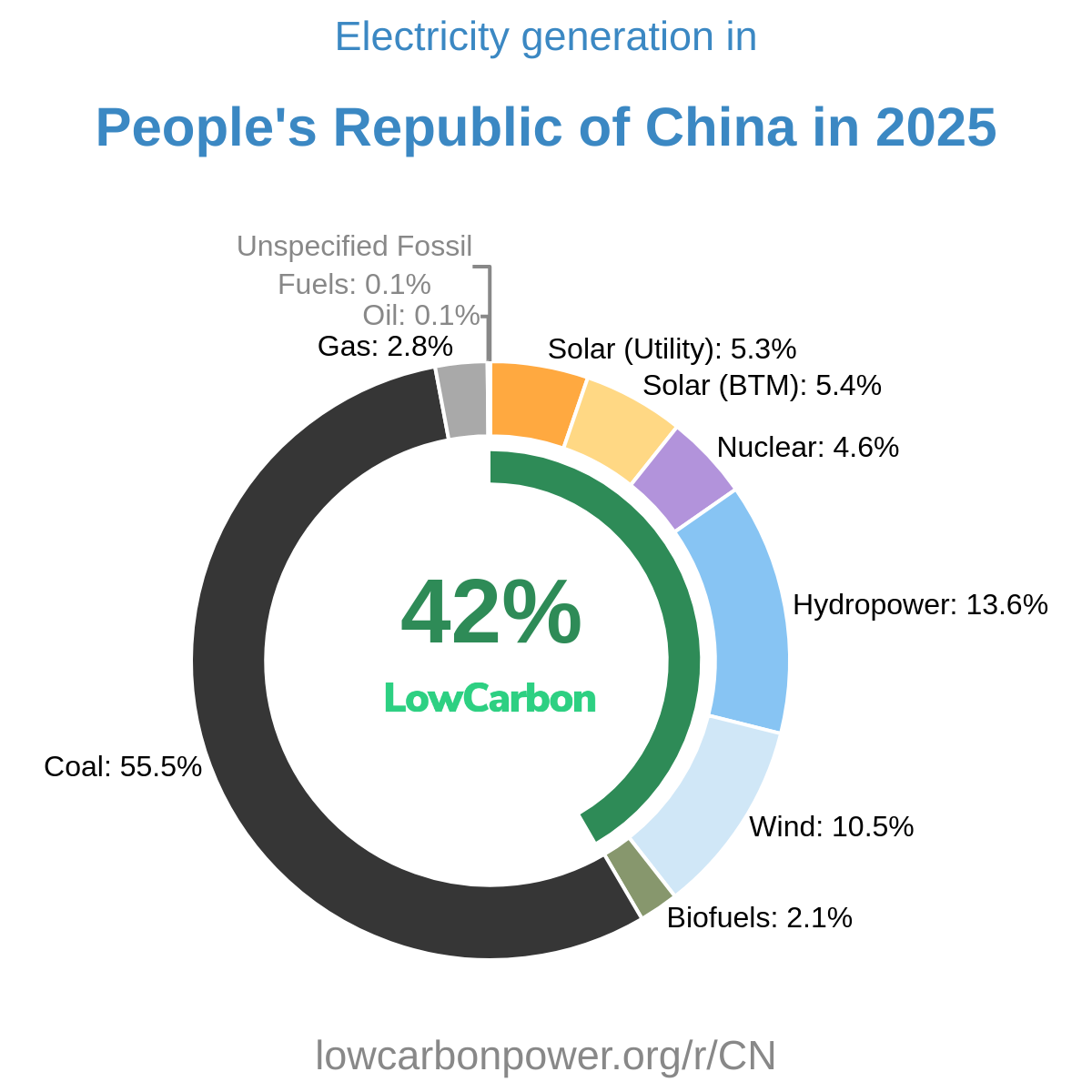
| People's Republic of China | 436.3 W | 5.8% | 621.1 TWh |
| Colorado | 401.8 W | 3.7% | 2.4 TWh |
| New Mexico | 398.6 W | 1.9% | 0.8 TWh |
| Utah | 321.1 W | 2.9% | 1.1 TWh |
| New Hampshire | 311.9 W | 2.3% | 0.4 TWh |
| Maryland | 297.3 W | 2.8% | 1.9 TWh |
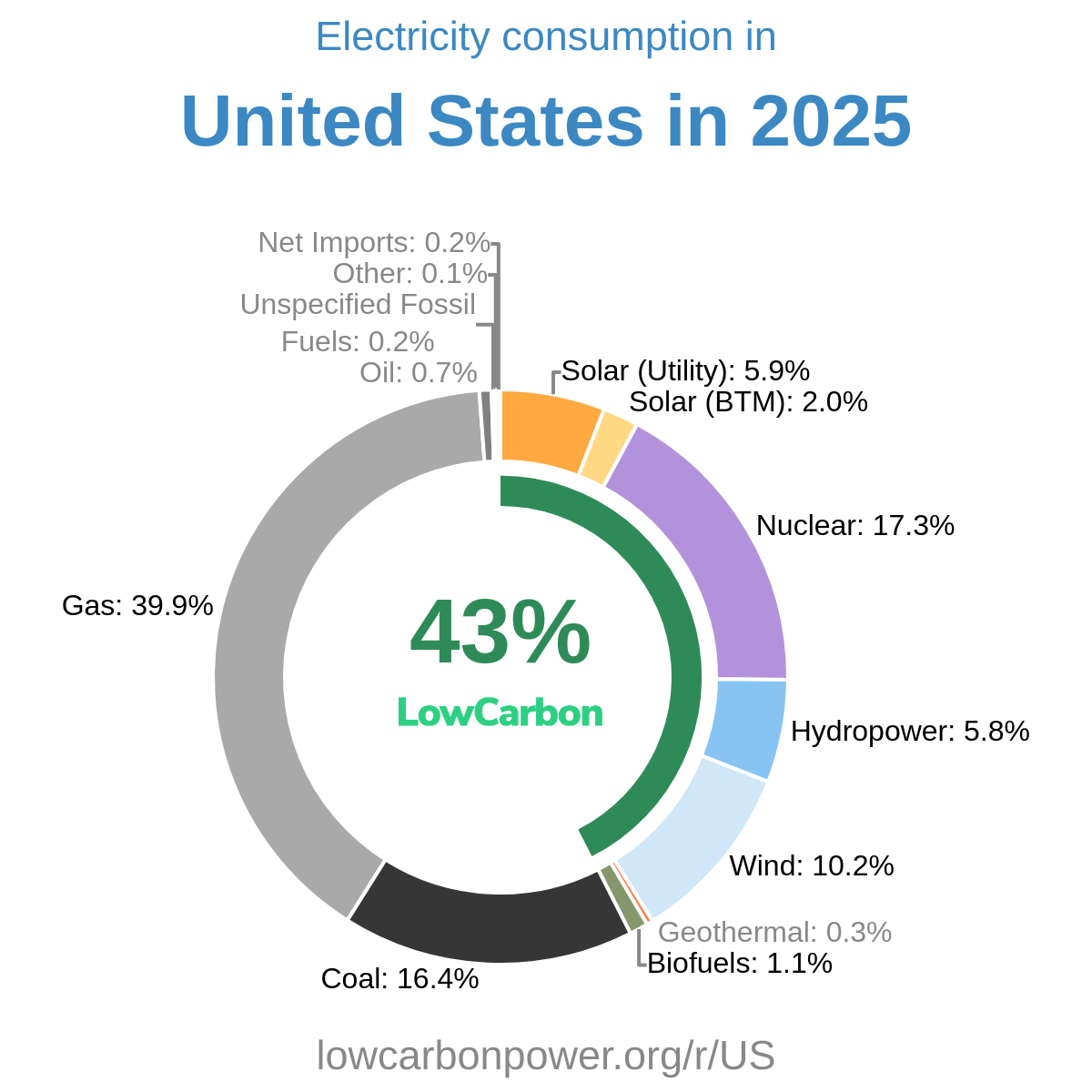
| United States | 286.8 W | 2.1% | 99.2 TWh |
| Rhode Island | 282.8 W | 3.2% | 0.3 TWh |
| New York | 281.1 W | 3.4% | 5.5 TWh |
| Florida | 233.3 W | 1.9% | 5.6 TWh |
| Delaware | 222.2 W | 1.8% | 0.2 TWh |
| Illinois | 207.9 W | 1.3% | 2.6 TWh |
| Arkansas | 196.7 W | 0.9% | 0.6 TWh |
| Oregon | 184.6 W | 1.1% | 0.8 TWh |
| Iowa | 182.6 W | 0.8% | 0.6 TWh |
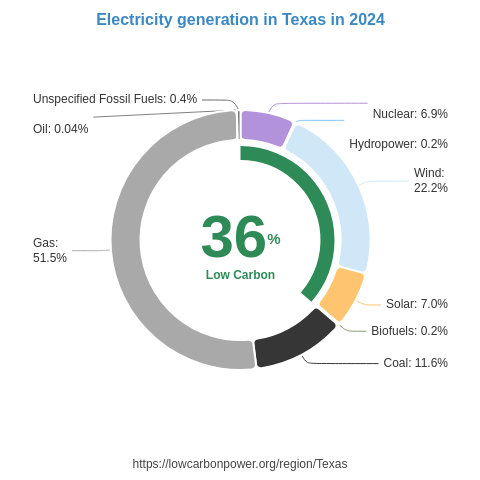
| Texas | 177.0 W | 0.9% | 5.6 TWh |
| Idaho | 159.4 W | 1.1% | 0.3 TWh |
| Montana | 146.6 W | 0.6% | 0.2 TWh |
| Missouri | 134.3 W | 0.9% | 0.8 TWh |
| Pennsylvania | 129.4 W | 0.7% | 1.7 TWh |
| Virginia | 125.5 W | 0.7% | 1.1 TWh |
| South Carolina | 121.9 W | 0.7% | 0.7 TWh |
| Washington | 96.5 W | 0.7% | 0.8 TWh |
| North Carolina | 96.2 W | 0.7% | 1.1 TWh |
| Minnesota | 91.5 W | 0.7% | 0.5 TWh |
| Louisiana | 86.5 W | 0.4% | 0.4 TWh |
| Wyoming | 75.1 W | 0.1% | 0.0 TWh |
| Wisconsin | 75.0 W | 0.6% | 0.4 TWh |
| Kansas | 73.6 W | 0.3% | 0.2 TWh |
| Oklahoma | 69.9 W | 0.3% | 0.3 TWh |
| Indiana | 63.4 W | 0.4% | 0.4 TWh |
| Georgia (US) | 56.8 W | 0.4% | 0.6 TWh |
| Ohio | 56.2 W | 0.4% | 0.7 TWh |
| West Virginia | 53.1 W | 0.2% | 0.1 TWh |
| Michigan | 44.8 W | 0.4% | 0.5 TWh |
| Kentucky | 41.5 W | 0.2% | 0.2 TWh |
| Nebraska | 33.0 W | 0.2% | 0.1 TWh |
| Alaska | 28.6 W | 0.3% | 0.0 TWh |
| Mississippi | 12.2 W | 0.0% | 0.0 TWh |
| Tennessee | 11.7 W | 0.1% | 0.1 TWh |
| South Dakota | 9.3 W | 0.0% | 0.0 TWh |
| North Dakota | 4.8 W | 0.0% | 0.0 TWh |
| Alabama | 0.0 W | 0.0% | 0.0 TWh |