

Low-Carbon More Than Covered Demand Growth in November 2025, Pushing Fossil Down
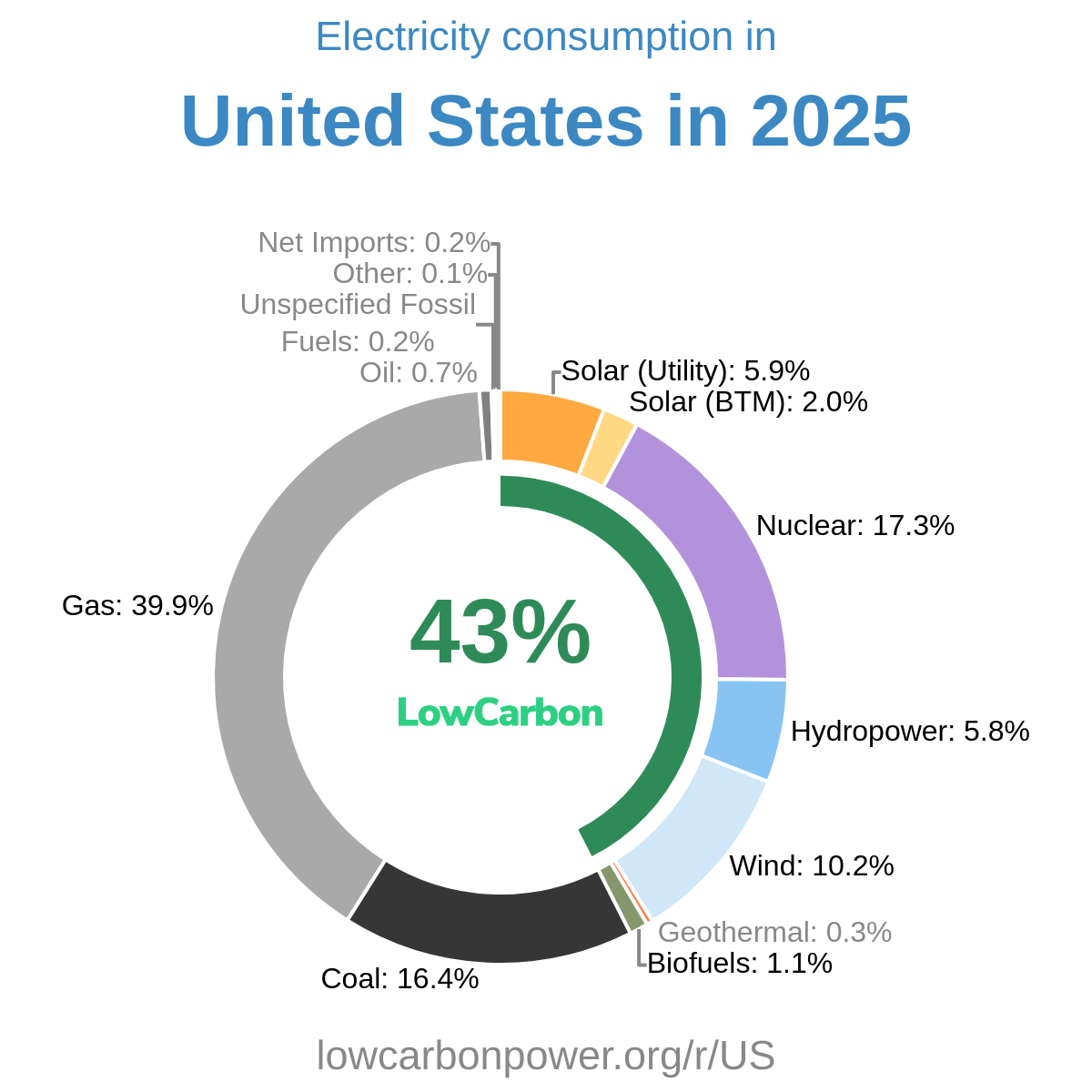
In November 2025, total electricity increased by about +91.7 TWh across reporting regions covering 59% of global electricity. Low-carbon electricity rose by about +97.0 TWh, while fossil electricity fell by about −8.2 TWh—meaning clean supply growth more than covered the month’s demand growth in the reported regions.
This months guest commentary

Countries with the Highest Growth
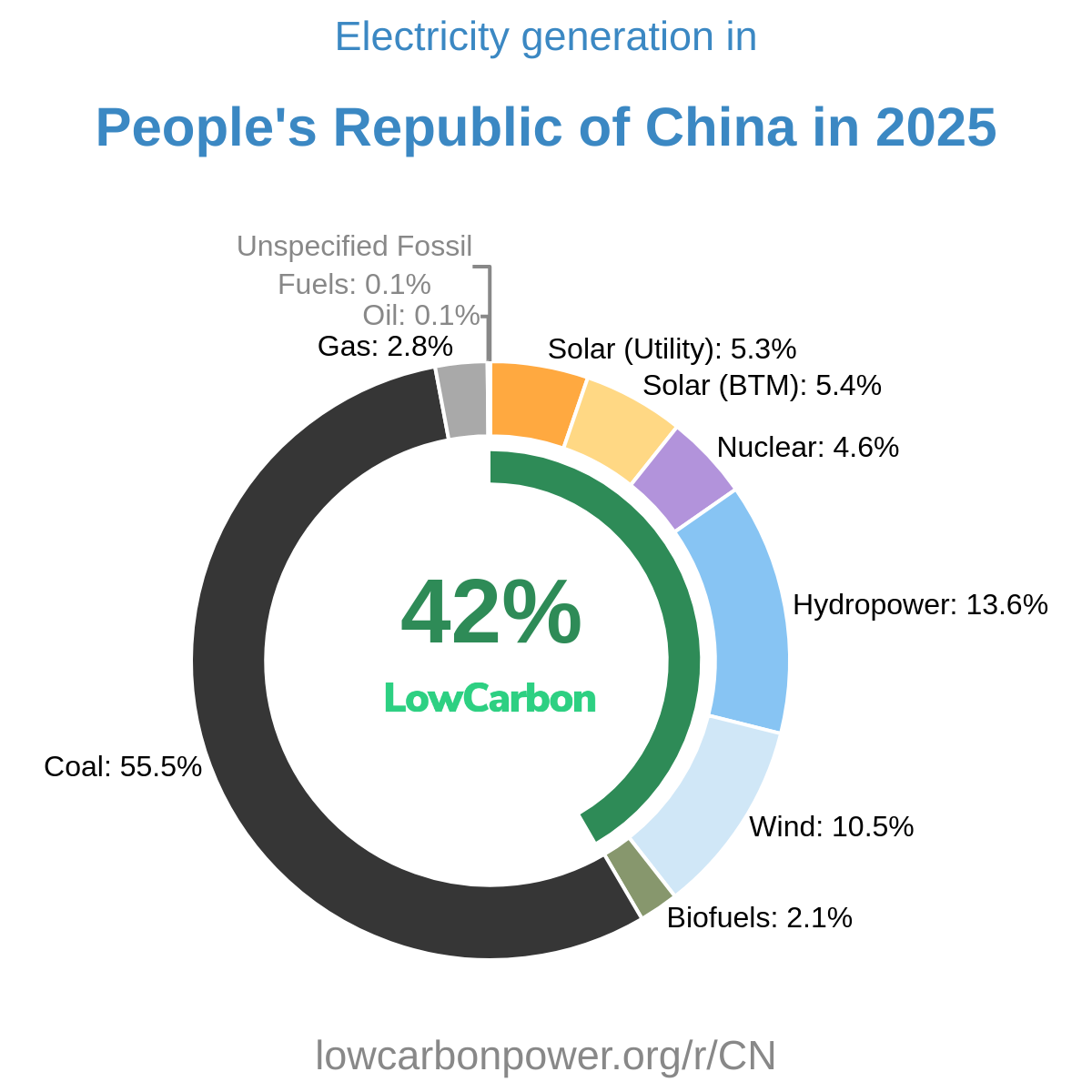
Mainland China increased total electricity by about +80.4 TWh in November—roughly 88% of the +91.7 TWh net increase across all reporting regions. The United States was the next-largest contributor at about +7.8 TWh. Among other countries with November data, France (+2.3 TWh), Spain (+2.0 TWh), and Finland (+0.39 TWh) were the largest growers. The biggest declines were Italy (about −0.74 TWh), Greece (about −0.54 TWh), and Romania (about −0.25 TWh).
Within Mainland China, November’s increase was driven by low-carbon electricity (+84.6 TWh) while fossil electricity declined (−4.2 TWh). Solar (+60.9 TWh) and wind (+23.0 TWh) led the clean supply increase, with hydro up about +16.6 TWh and nuclear up about +1.6 TWh.
Global Trends (and What 59% Coverage Implies)
These changes compare November 2025 to November 2024. With reporting regions covering 59% of global electricity, the direction and broad shape of the shift is informative—especially because it includes large systems like Mainland China and the United States—but it should be read as directional rather than a precise global total. That 59% is based on the prior year’s total electricity generation in the reporting regions as a share of the global total.
Which Energy Sources Moved Most in November
Across all regions with November data, low-carbon growth was driven primarily by solar (+66.9 TWh), with wind (+25.5 TWh) and hydro (+17.6 TWh) also adding sizable gains. Nuclear increased by about +4.5 TWh. With total electricity up +91.7 TWh while low-carbon grew +97.0 TWh, fossil generation fell by about −8.2 TWh in the reported regions.
Year-to-Date Context
Across the months of 2025 reported so far, the average monthly change has been about +108.9 TWh for total electricity across the reporting regions, with low-carbon electricity up about +98.2 TWh and fossil electricity up about +9.2 TWh.