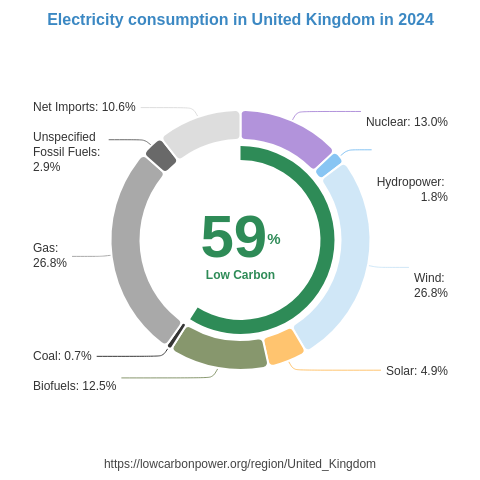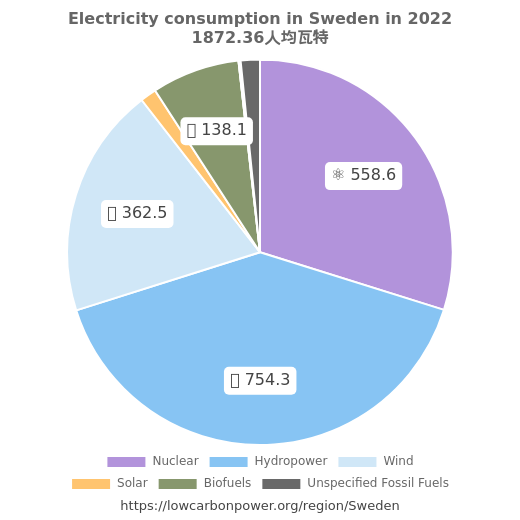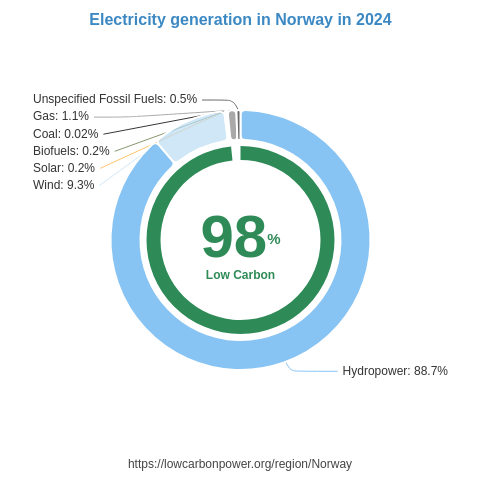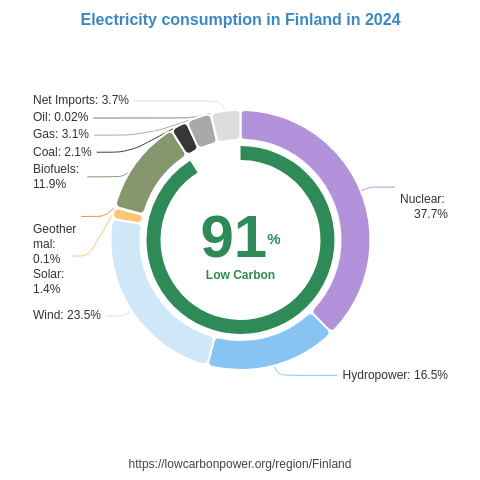


Denmark has made remarkable strides in transforming its electricity generation, with a commendable 93% of its electricity coming from low-carbon sources over the latest period between June 2025 and May 2026. Highlighting this progress, a significant portion, more than half, is generated by wind energy, contributing over 60%. Additionally, biofuels account for roughly a fifth of the electricity, and solar provides around 14%. The reliance on fossil fuels has diminished considerably, comprising less than 7% of the total electricity supply, with gas and coal constituting small fractions. Denmark's ability to be a net exporter of electricity underscores the country's leadership in aiding neighboring regions to reduce emissions. However, the future challenge lies in further increasing electricity generation to electrify other crucial sectors like transport, heating, and industry.
Is Electricity Growing in Denmark?
Analyzing recent trends in Denmark's electricity consumption, it is apparent that there has been a noticeable decline when comparing the latest data with historic records. The 2026 per capita electricity consumption stood at 5673 kWh, marking a significant decrease of around 4500 kWh from the previous peak recorded in 1996. Conversely, Denmark's low-carbon electricity generation has reached a new height, with 5283 kWh per person, surpassing the earlier record set in 2024 by nearly 250 kWh. This emphasizes a positive trend towards augmenting clean electricity, but underscores the concern that overall electricity consumption is not growing. Stagnation or reductions in electricity consumption could hinder potential future developments in electrification, especially with increasing demands from sectors such as AI.
Suggestions
To advance Denmark’s sustainable energy landscape, it is imperative to expand existing infrastructure, particularly in wind and solar generation, which have proven to be highly effective. With wind energy already forming a substantial portion of the electricity mix, further investment and development in this area can enhance output. Similarly, increasing the deployment of solar technology will substantially boost the clean electricity share. As a progressive country in low-carbon energy, Denmark should seriously consider integrating nuclear energy into its mix, as it is a major clean electricity source offering stable, reliable, and environmentally friendly power. By embracing these strategies, Denmark can significantly bolster its electricity generation capacity, aligning with its commitment to sustainability and energy security.
* 12M = Last 12 months (Jun 2025 – May 2026) — a rolling 12-month period, not a calendar year.
History
Looking back at Denmark's history of low-carbon electricity, particularly in wind energy, we see a trend of steady growth from the late 1990s through the early 2000s, marked by significant contributions each year such as the increase evident in 1998, 2000, and beyond. The early 2010s saw continued expansion in wind, with notable increments alongside an important boost in biofuels in 2010. The mid to late 2010s featured fluctuations, with peaks like 2011 and challenges such as a decline in 2016, yet the subsequent years rebounded with strong growth. Biofuels also saw growth spurts, particularly around 2021. Solar energy began to make a notable impact in 2023, and while wind energy demonstrated variability, the overall trend remained upwards. The push for capacity additions should be relentless, as these clean, dependable sources are indispensable for a sustainable future.
* 12M = Last 12 months (Jun 2025 – May 2026) — a rolling 12-month period, not a calendar year.
Electricity Imports and Exports
Balance of Trade
* 12M = Last 12 months (Jun 2025 – May 2026) — a rolling 12-month period, not a calendar year.
Nearby Regions