LowCarbonPower logo
Instagram Facebook X (Twitter)

Low-Carbon More Than Covered Demand Growth in November 2025, Pushing Fossil Down

本月客座评论

從11月的柱型圖看來,低碳電力大幅增長 我很驚訝中國大陸的用電增長,他一個就抵其其他七個國家,應該更多吧,我覺得他可抵過十幾二十個。 這到底是大陸經濟仍在成長?或是在節能的部份沒有努力節能呢? 還是他們的AI及電動車需求帶動了用電成長(電動車是最有可能的) 再來AI用電需求(未來會更明顯) 大陸的比亞迪電車銷售量已超越特斯拉成為全球第一大,所以我認為是電動車造成。 在低碳電力供應增長部份,我很高興看到核能在11月增加了45億度(10月份報告是增長20億度) 這種連續增長代表世界正在擁抱核電 我希望它能慢慢追上其他再生能源 考慮興建(佈建)的難度及建置成本等因素,太陽能是難度最低的(低成本可快速攤提成本並賺取更多),所以它一直是成長最快的。 歐美核能建置費用偏高,未來應會被中國和韓國的核電產業取代

Low-Carbon More Than Covered Demand Growth in November 2025, Pushing Fossil Down

In November 2025, total electricity increased by about +91.7 TWh across reporting regions covering 59% of global electricity. Low-carbon electricity rose by about +97.0 TWh, while fossil electricity fell by about −8.2 TWh—meaning clean supply growth more than covered the month’s demand growth in the reported regions.

本月客座评论

從11月的柱型圖看來,低碳電力大幅增長 我很驚訝中國大陸的用電增長,他一個就抵其其他七個國家,應該更多吧,我覺得他可抵過十幾二十個。 這到底是大陸經濟仍在成長?或是在節能的部份沒有努力節能呢? 還是他們的AI及電動車需求帶動了用電成長(電動車是最有可能的) 再來AI用電需求(未來會更明顯) 大陸的比亞迪電車銷售量已超越特斯拉成為全球第一大,所以我認為是電動車造成。 在低碳電力供應增長部份,我很高興看到核能在11月增加了45億度(10月份報告是增長20億度) 這種連續增長代表世界正在擁抱核電 我希望它能慢慢追上其他再生能源 考慮興建(佈建)的難度及建置成本等因素,太陽能是難度最低的(低成本可快速攤提成本並賺取更多),所以它一直是成長最快的。 歐美核能建置費用偏高,未來應會被中國和韓國的核電產業取代

Countries with the Highest Growth

Mainland China increased total electricity by about +80.4 TWh in November—roughly 88% of the +91.7 TWh net increase across all reporting regions. The United States was the next-largest contributor at about +7.8 TWh. Among other countries with November data, France (+2.3 TWh), Spain (+2.0 TWh), and Finland (+0.39 TWh) were the largest growers. The biggest declines were Italy (about −0.74 TWh), Greece (about −0.54 TWh), and Romania (about −0.25 TWh).

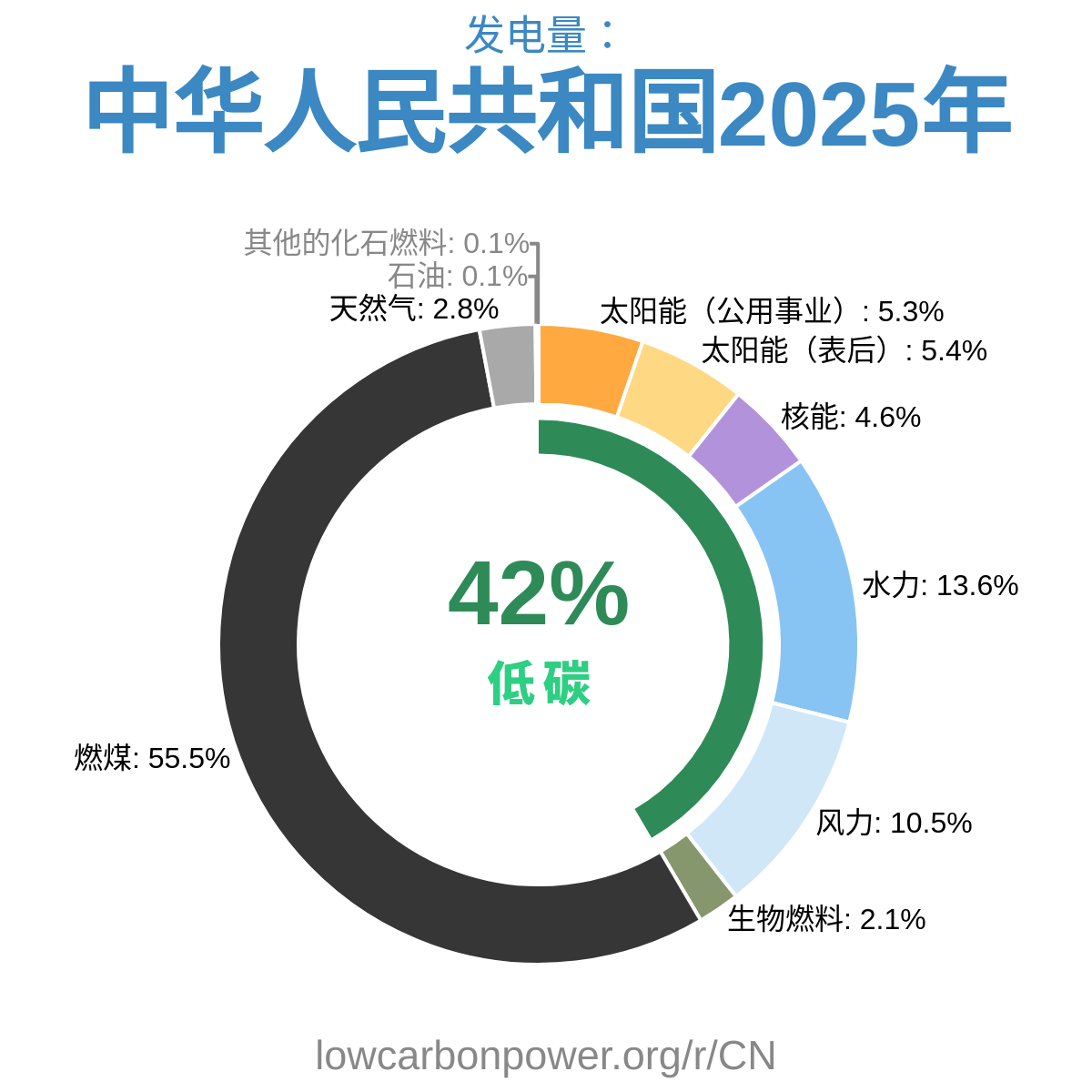
Within Mainland China, November’s increase was driven by low-carbon electricity (+84.6 TWh) while fossil electricity declined (−4.2 TWh). Solar (+60.9 TWh) and wind (+23.0 TWh) led the clean supply increase, with hydro up about +16.6 TWh and nuclear up about +1.6 TWh.

These changes compare November 2025 to November 2024. With reporting regions covering 59% of global electricity, the direction and broad shape of the shift is informative—especially because it includes large systems like Mainland China and the United States—but it should be read as directional rather than a precise global total. That 59% is based on the prior year’s total electricity generation in the reporting regions as a share of the global total.

Which Energy Sources Moved Most in November

Across all regions with November data, low-carbon growth was driven primarily by solar (+66.9 TWh), with wind (+25.5 TWh) and hydro (+17.6 TWh) also adding sizable gains. Nuclear increased by about +4.5 TWh. With total electricity up +91.7 TWh while low-carbon grew +97.0 TWh, fossil generation fell by about −8.2 TWh in the reported regions.

Year-to-Date Context

Across the months of 2025 reported so far, the average monthly change has been about +108.9 TWh for total electricity across the reporting regions, with low-carbon electricity up about +98.2 TWh and fossil electricity up about +9.2 TWh.

Instagram Facebook X (Twitter)